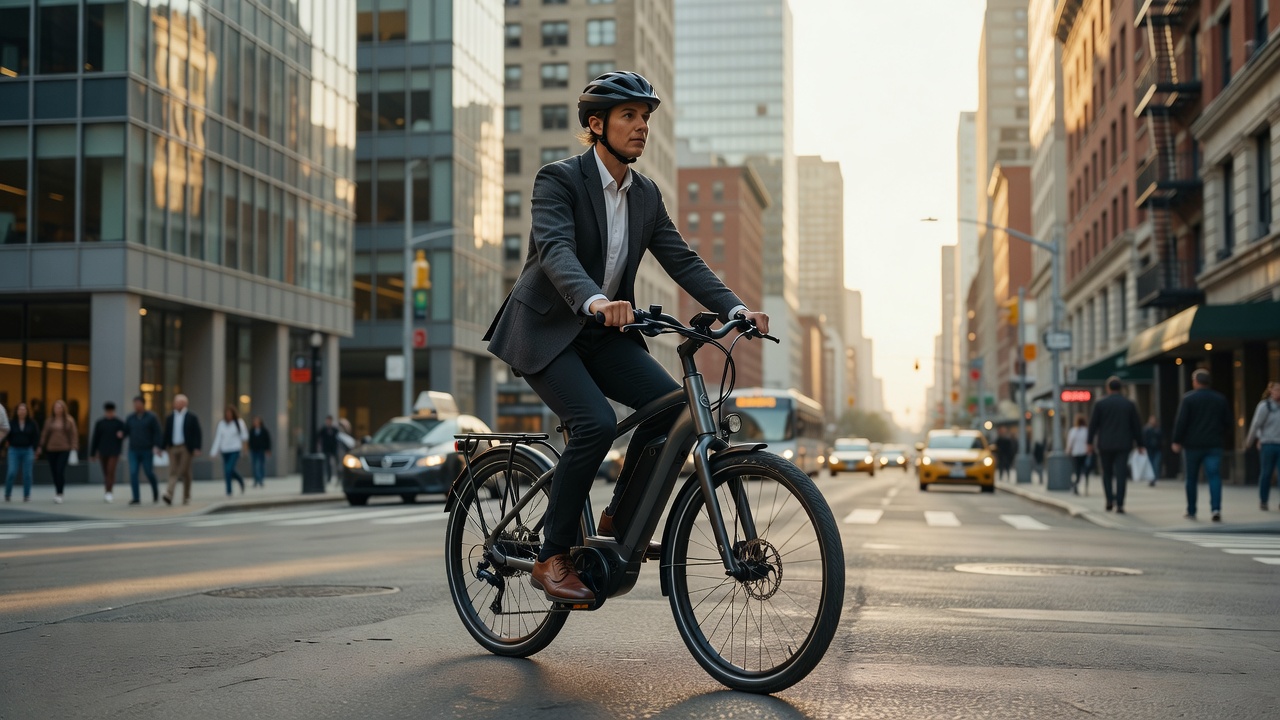
The "best" e-bike doesn't exist — only the best e-bike for your commute, your home and your budget. Work through these seven questions in order and you'll narrow hundreds of models down to two or three serious candidates.
1. How Far Do You Ride?
Start with your daily round-trip distance. As a rough guide, city riding consumes about 8–15 Wh per kilometre depending on assist level, rider weight, hills, wind and temperature. That means:
- Under 10 km round trip: almost any battery works, including compact 300 Wh packs.
- 10–40 km round trip: look for 400–500 Wh to avoid daily charging.
- Over 40 km round trip: choose 500 Wh or more, or a bike with a range extender or dual-battery option.
Try our commute range calculator to see how our Top 5 bikes handle your route.
2. Where Will You Store It?
This question eliminates more bikes than any other. If you live upstairs without a lift, every kilogram matters — aim for under 20 kg, like the Turbo Vado SL 2. If you combine trains with cycling, a folding model like the Brompton Electric is ideal. If you have a garage or secure bike room, weight matters far less.
3. Hub Motor or Mid-Drive?
| Feature | Hub Motor | Mid-Drive |
|---|---|---|
| Location | Front or rear wheel hub | At the pedals (bottom bracket) |
| Hill climbing | Good on moderate hills | Excellent — uses the bike's gears |
| Ride feel | Pushing or pulling sensation | Natural, like stronger legs |
| Price | Lower | Higher |
| Maintenance | Simple; less drivetrain wear | More chain/belt wear; dealer servicing |
Hub motors suit budget buyers and flatter cities. Mid-drives from brands like Bosch, Shimano and Specialized suit hilly cities and riders who want a natural feel.
4. Torque Sensor or Cadence Sensor?
A cadence sensor turns the motor on when the pedals rotate, delivering a set amount of power regardless of effort. A torque sensor measures how hard you push and responds proportionally, which feels smoother and more controllable in traffic. Torque sensors were once premium-only; the Aventon Pace 500.3 brings them to the budget end of the market.
5. Chain or Belt? Derailleur or Hub Gears?
- Chain + derailleur: efficient, lightweight and affordable, but needs regular cleaning and lubrication.
- Internal gear hub: enclosed, low-maintenance and able to shift at standstill.
- Continuously variable hub (e.g. Enviolo): infinite ratios with no steps — perfect for stop-start riding.
- Belt drive: clean, quiet and long-lasting; requires a frame designed for it and pairs with hub gears.
For all-weather daily commuting, a belt with a hub gear — as on the Gazelle Ultimate C380 HMB — offers the lowest maintenance of any setup.
6. Frame Style and Comfort
Step-through frames make it easier to mount and dismount at traffic lights and in skirts or suits. An upright riding position improves visibility and reduces strain on wrists and back. Suspension forks, wide tyres and suspension seatposts help on cobbles and potholes. For carrying children or groceries, consider a compact cargo bike like the Tern HSD P5i.
7. What Is Your True Budget?
Look beyond the purchase price. Budget for:
- A quality lock (or two) — often 5–10% of the bike's value.
- Insurance covering theft and accidental damage.
- Annual servicing, brake pads, tyres and chain or belt replacements.
- A replacement battery after several years of heavy use.
- Helmet, lights (if not integrated), mudguards and luggage.
Many employers and governments offer purchase incentives, such as the UK Cycle to Work scheme and various city or state e-bike rebates. Check what is available locally before buying.
Always test ride. Specs only tell half the story. Ride at least two candidates on similar roads to your commute, including a hill start and a tight turn, before deciding.
Quick Decision Summary
- Light and sporty: Specialized Turbo Vado SL 2
- Comfort and low maintenance: Gazelle Ultimate C380 HMB
- Kids and cargo: Tern HSD P5i
- Trains and tiny flats: Brompton Electric C Line
- Best value and speed: Aventon Pace 500.3